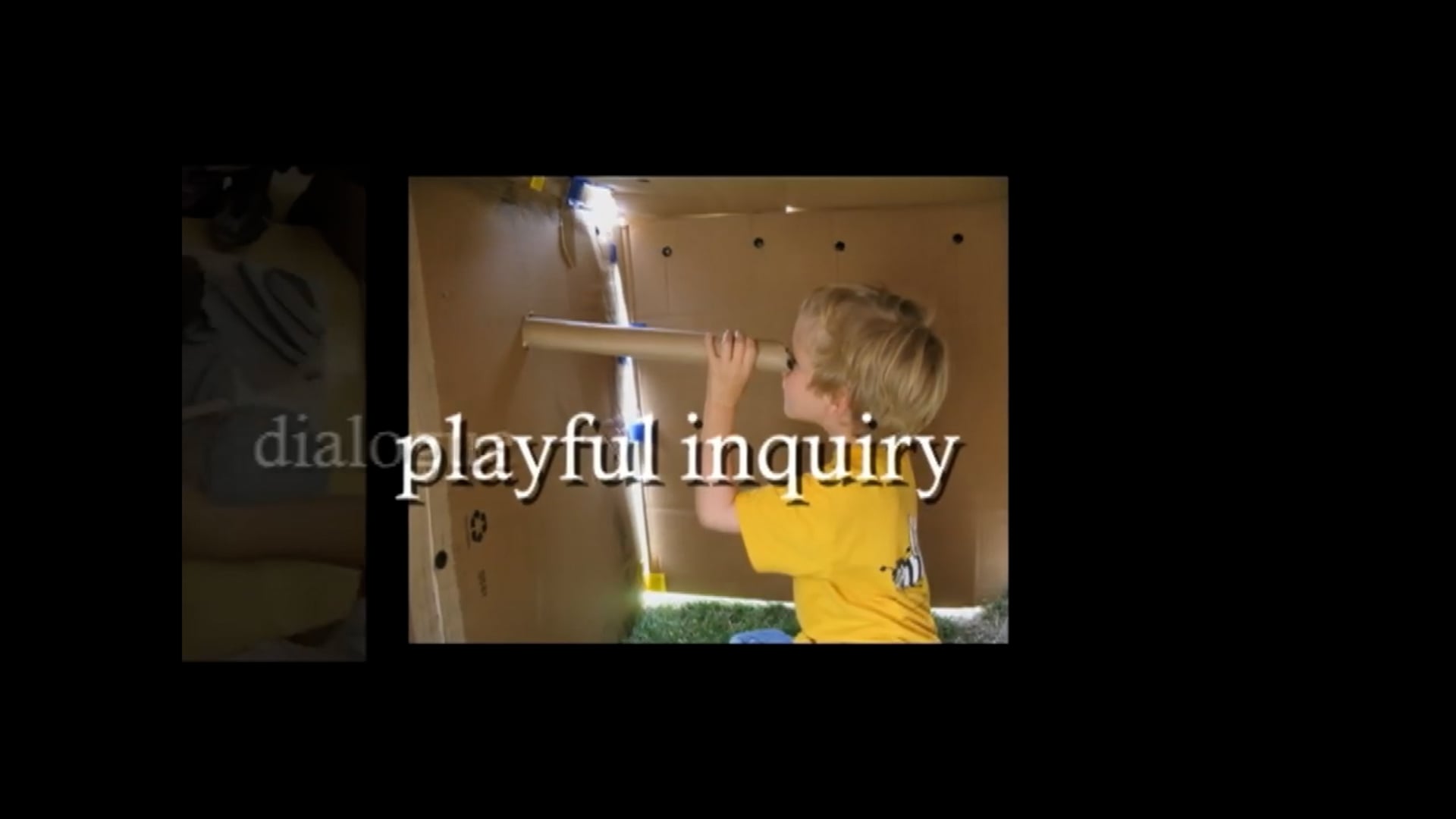
Loris Malaguzzi, the founder of the Reggio Emilia approach to learning, famously said, "The child has a hundred languages... a hundred thoughts, a hundred ways of thinking, of playing, of speaking." And yet, even though this is not the primary way that all learners make sense of things, in education, we sometimes limit ourselves to thinking with words.
_JPG.jpg)
When we offer our students (and ourselves) the opportunity to engage in other modes of thinking with thinking materials, the materials can become active participants that help students to generate new insights about their thinking.
With these visual and symbolic languages available to them, learners can deepen and strengthen their thinking about complex questions and ideas. These thinking tools are particularly helpful in creating a culture of inquiry.
There many possibilities for the types of materials you can invite students to think with.
Different materials offer different ways of thinking. Roberta Pucci says, "every material has its own qualities and personality. It is a kind of natural grammar. This grammar is the range of possible transformations that the material can undergo. You can have a dialogue with the material and the material will reveal itself to you." Ultimately, there will be a dialogue between the grammar of a material and the person who is meeting and transforming that material.
It is really important to allow students enough time to explore the materials so they can co-create collective understanding of the affordances of each type of material (ie: what can clay do?). With the knowledge of the 'grammar of each material,' students will know what each material can offer them before they are asked to, or choose to, think with it.
GALLERY: CENTRAL OKANAGAN
Educators have been creating opportunities for their students (K-12) to use materials as thinking tools. Peruse the images, dialogue, and questions in the gallery below to see how some of this learning is beginning to unfold.


THINKING MATERIALS & HOW TO USE THEM

Thinking
With Materials:
How To Use Them
Use this thinking materials tool to expand student's thinking about a key concept or question.
This document was co-created by Opal School and Harvard's Project Zero.

Possibilities:
A List Of Materials To
Use As Thinking Tools
This document was created to give you ideas about the types of materials that might encourage your students to learn new thinking 'languages' and think in different ways.

Questions To Ask
Students As They
Play With The Materials
This document should give you some ideas about questions you can ask students as they begin to play with a material so they can determine what it can do (it's affordances).

What Can This
Material Do?
Use this tool to introduce children to new materials to help them to
learn the affordances of a material. What can this material do? Co-construct your own list with your students as YOU discover 'what can clay do?' and 'what can wire do?' etc.
This document was co-created by Opal School and Harvard's Project Zero.
_JPG.jpg)
Asking Big
Questions
When you have a strong image of students as being capable, competent and curious, you know they can think deeply about complex questions and ideas. Use this tool to normalize uncertainty by encouraging students to ask big questions.
This document was co-created by Opal School and Harvard's Project Zero.

Creating Artist Statements
After thinking with materials, It is important that students be given the opportunity to reflect through writing. Use this tool to build student's capacity for communicating complex ideas.
This document was co-created by Opal School and Harvard's Project Zero.
HOW TO SET UP YOUR SPACES
HOW ARE WE USING MATERIALS TO THINK
IN THE CENTRAL OKANAGAN?
THE AFFORDANCES OF...
LEARNING RESOURCES
Click on the image of the book for more information about how to use materials as thinking tools and partners in inquiry based learning. Also, learn more about the connection between thinking materials and the philosophy of reggio based learning.


BLOG POSTS
Click on the blog posts below to learn from the experts. They will teach you how materials can be used as thinking tools with playful inquiry (including numeracy and literacy), how to create beautiful spaces that will allow students to form relationships with materials, and how to use pedagogical documentation to amplify learning and determine where to take the learning next.

These blog posts are all from the Opal School Museum of Play. Due to COVID, the school has now closed. However, they have made all of their resources accessible to educators as a resource for professional development with not cost to users. This link takes you to Opal School Online.
The website is rich with videos, images, and dialogue, which all help to tell the story (in this case) of how to use materials as thinking partners in the
learning process.


Here is a collection of blog posts about using materials as thinking partners. Click to learn more.


WEBSITES & DOCUMENTS
Click on the image of the website or document for more information about how to engage students in thinking with materials.